Background
On Thursday, March 23, 2023, Dora Sosu and her husband, Teye Goe (pseudonyms), residents of Anyakpor, a fishing community along the Ada Foah sea stretch in the Ada East District, reported to the Ada Foah Clinic for delivery. Dora safely delivered a bouncing baby boy, bringing joy to the family after having five girls.
A few weeks after birth, during preparations for circumcision, the circumcision assistant identified an abnormality in the positioning of the child’s penile opening. The anomaly caused urine to divert downward rather than pass through the normal channel. As a result, the child could not urinate normally without assistance.
Problem Statement
As the child grew, the condition increasingly affected his physical, emotional, and social well-being. He became aware of his challenge, began avoiding visitors, and refused to play with his peers, resulting in reduced self-confidence and social isolation.
The family, already economically vulnerable and dependent on subsistence livelihoods, could not raise the funds required for corrective surgery. The child’s condition delayed his enrollment in school, as he required constant care.
Additionally, the condition was misunderstood within the community and perceived by some as a curse, leading to stigma and discrimination against the family. This negatively affected household harmony, resulting in tension between the parents and emotional distress within the family.
Project Intervention
In 2025, under the Volta Resilience Foundation’s (VRF) Protecting Children at Risk of Losing Parental Care Project, supported by NORAD through SOS Ghana, the family was selected for support. As part of the project, a comprehensive medical intervention was arranged for Cofie Goe (pseudonym).
On 6th December 2025, the child successfully underwent corrective surgery to address the congenital defect. The intervention fully restored his ability to urinate normally.
In addition to the medical support, the project provided economic empowerment assistance to the mother, Dora Sosu, through a direct grant to support her petty trading business.
Results and Outcomes
- The corrective surgery was successful, and Cofie Goe has fully recovered.
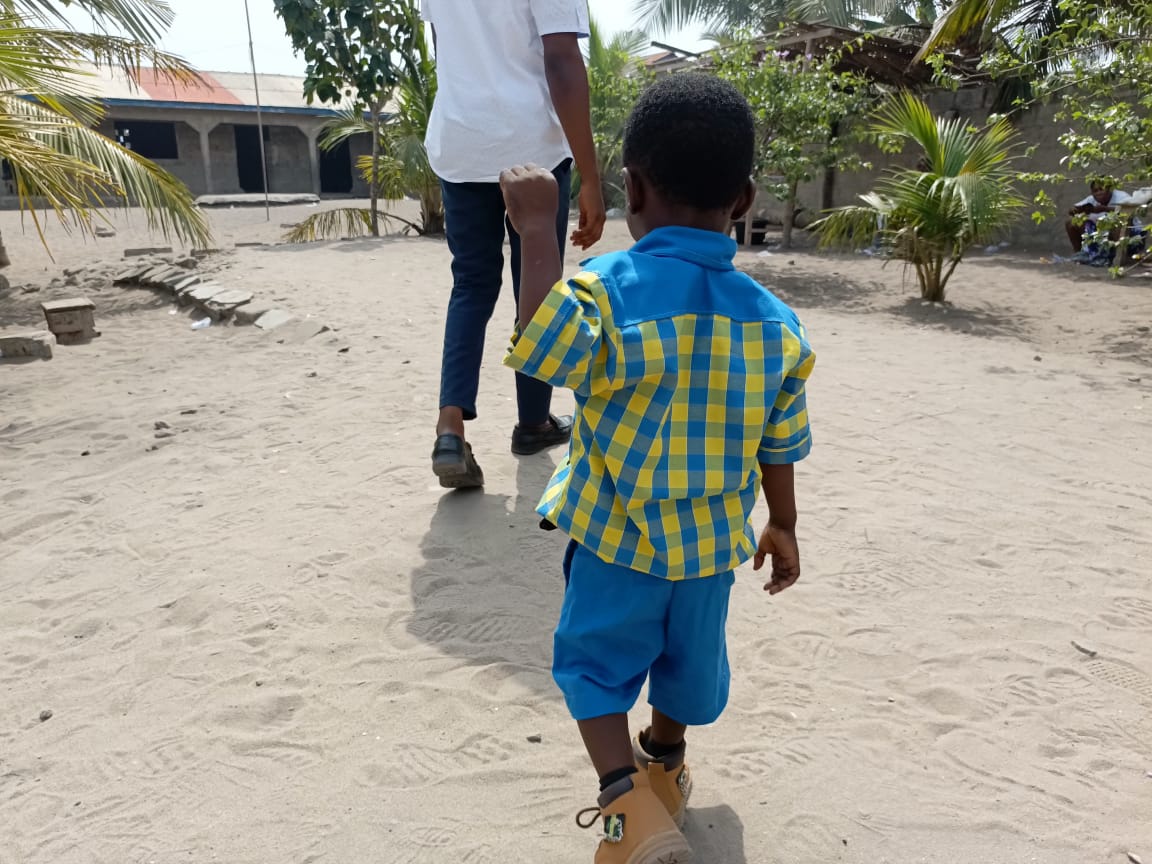
- The child is now able to play freely with his peers and has regained confidence.
- He has been enrolled in school and is actively enjoying academic life.
- Community stigma toward the child and family has significantly reduced.
- Household relationships have improved, with better communication between the parents.
The mother, a petty trader selling onions at the Kasseh Market, reported improved financial stability after receiving the grant. Previously, she relied heavily on credit to purchase goods, which placed a financial burden on her business. With the grant, she is now able to restock her goods independently, increasing profits and improving household welfare.
Beneficiary Testimonies
“We have been thinking about ways to get the needed support for the corrective surgery, which affected our emotional stability at home. After the surgery, communication between my wife and I has improved, and we can now focus on taking proper care of our children,” said Teye Goe, the father and a peasant farmer.
“Previously, without support, I had to take goods on credit. This placed a lot of financial burden on me. Now, I can buy more goods without credit, and this has improved the financial stability and freedom of my household,” said Dora Sosu, the mother and beneficiary of the Norad-assisted project.
Conclusion
The intervention has significantly improved Cofie Goe’s physical health, emotional well-being, and social inclusion, while strengthening his household’s economic resilience and harmony. The combined medical and livelihood support demonstrates the effectiveness of integrated social protection approaches in preventing risks that could lead to loss of parental care.
The family expressed profound gratitude to the project and partners for restoring hope, dignity, and stability to their lives