Ada-Foah, Ghana.
- Introduction
Access to quality healthcare remains a persistent challenge for vulnerable children across rural and underserved communities in Ghana. In response to this critical gap, the “Protecting Children at Risk of Losing Parental Care” project—implemented by SOS Children’s Villages Ghana in partnership with Volta Resilient Foundation and supported by Norwegian Agency for Development Cooperation—has taken decisive action to safeguard children’s wellbeing.
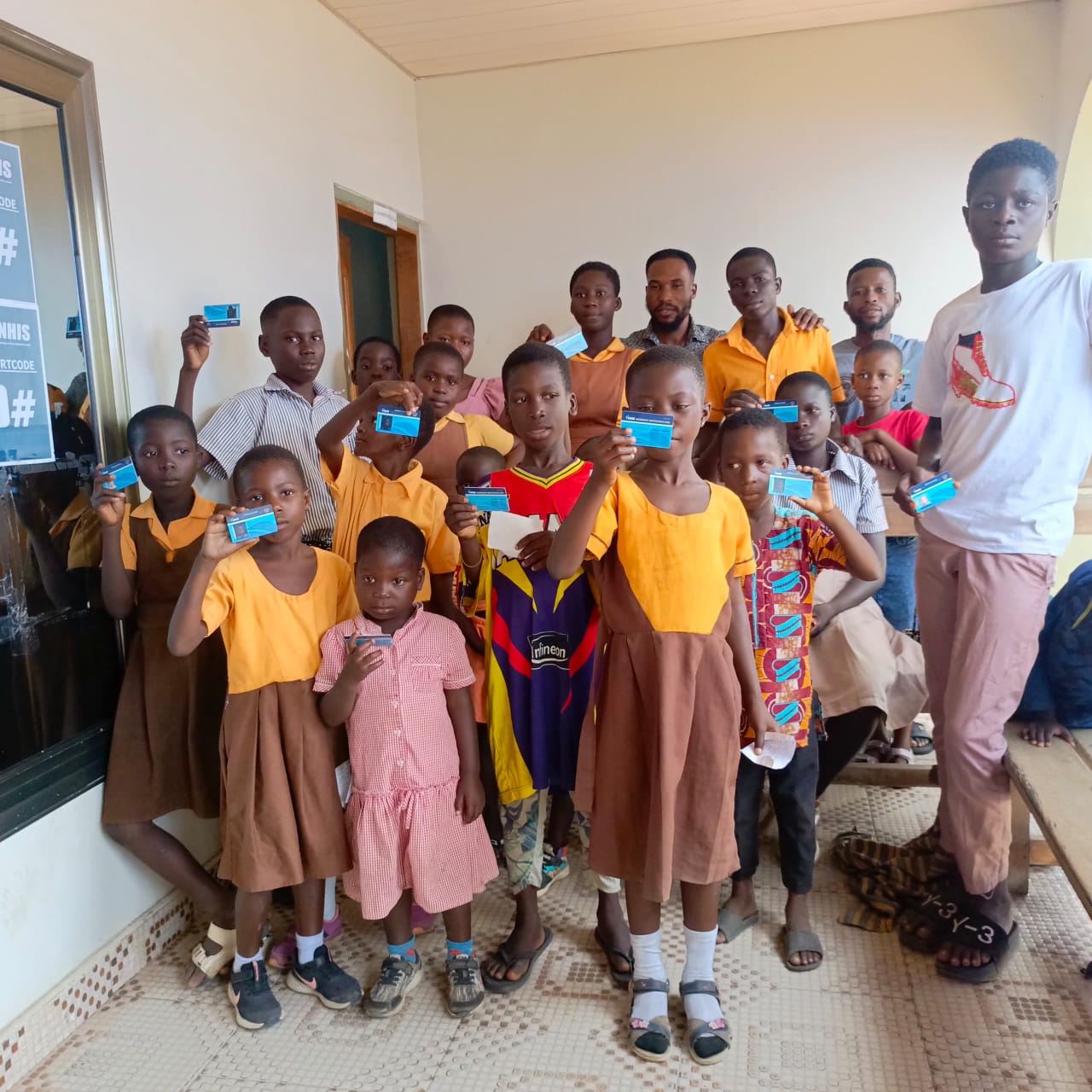
As part of this broader five-year (2025–2029) intervention, a targeted initiative was carried out to enroll vulnerable children onto the National Health Insurance Scheme (NHIS) across selected communities in the Ada East District and Ada West District.
This intervention directly aligns with the project’s overarching goal: to strengthen child protection systems, prevent family-child separation, and ensure that children grow up in safe, supportive environments with access to essential services—especially healthcare.
- Project Context: Protecting Children at Risk
The NORAD-funded initiative focuses on children who are at risk of losing parental care due to poverty, neglect, violence, trafficking, and other socio-economic vulnerabilities. Through strategic collaboration with government institutions, community structures, and local partners, the project integrates health, protection, and socio-economic support systems.
Key interventions under the project include:
- Establishment of Community Child Protection Committees (CCPCs)
- Strengthening local child protection systems and reporting mechanisms
- Capacity building for caregivers and community actors
- Advocacy and awareness on child rights and positive parenting
Within this framework, healthcare access—particularly through NHIS enrollment—has emerged as a critical pillar in safeguarding children’s survival and development.
- Objective of the NHIS Enrollment Initiative
The NHIS enrollment exercise was designed to achieve the following:
- Provide health insurance coverage for vulnerable children in target communities
- Improve access to affordable and quality healthcare services
- Reduce out-of-pocket medical expenses for caregivers
- Support early detection and treatment of childhood illnesses
- Target Areas
The intervention covered a total of 15 communities across the Ada enclave:
Ada East District (436 Children)
Pute, Elavanyo, Partukope, Adedetsekope, Anyarkpor, Ocansekope, Otroper, Totimekope, Ada Foah, Futuenya, Luhuse, Azizanya, and Big Ada.
Ada West District (421 Children)
Addokope, Luhuor, Afiadenyigba, Englisi Kenya, Adicherekope, Dorgobom, Nuhalenya, and Hwakpo.
- Beneficiary Statistics
A total of 857 children were successfully enrolled onto NHIS:
- Ada East: 436 children
- Ada West: 421 children
- Male: 451
- Female: 406
This reflects a strong commitment to gender-inclusive access to healthcare and equitable service delivery.
- Results and Impact
The successful enrollment of 857 children represents a significant intervention in advancing child welfare and protection. The expected outcomes include:
- Improved access to medical consultations, laboratory services, and essential medications
- Reduction in preventable childhood diseases
- Enhanced early diagnosis and timely treatment
- Decreased financial burden on caregivers and families
- Increased school attendance and participation, as healthier children are more likely to remain in school
- Strengthened community-level child protection systems, as health security reduces vulnerability
Beyond immediate health benefits, the initiative contributes to long-term developmental outcomes, reinforcing the link between child protection and access to essential services.
- The Role of Volta Resilient Foundation (VRF)
The involvement of Volta Resilient Foundation has been instrumental to the success of this intervention. Recognized for its strong human rights orientation and grassroots engagement, VRF continues to play a pivotal role in protecting children across high-risk communities along the Volta Basin.
Through its flagship Liberate Me Project, VRF has:
- Rescued and rehabilitated trafficked children
- Provided psychosocial support and educational reintegration
- Strengthened community vigilance against child exploitation
VRF’s approach goes beyond response—it emphasizes prevention, community ownership, and system strengthening. By working closely with traditional leaders, families, and youth groups, the organization addresses harmful norms while building sustainable protection structures.
Its integrated development model—linking child protection, livelihoods, education, and environmental resilience—ensures that root causes of vulnerability are addressed holistically.
- Conclusion
The NHIS enrollment of 857 children under the VRF & SOS NORAD Project marks a critical milestone in safeguarding vulnerable children in the Ada East District and Ada West District.
By removing financial barriers to healthcare, this intervention not only improves immediate health outcomes but also strengthens the broader child protection ecosystem—ensuring that children remain healthy, protected, and within their families.
Sustained collaboration between stakeholders, continuous community engagement, and integrated service delivery will be essential to maintaining these gains and expanding impact in the years ahead.
Written By: Okantey-Nanor Clement
Stores / Volunteer / Assistant Accounts
Edited by: Seth Priceless Ala-Amegavie
Editor-in-Chief